US F-15 Fighter Jet Crashes in Kuwait: Pilot Ejects Safely Amidst Unfolding Details
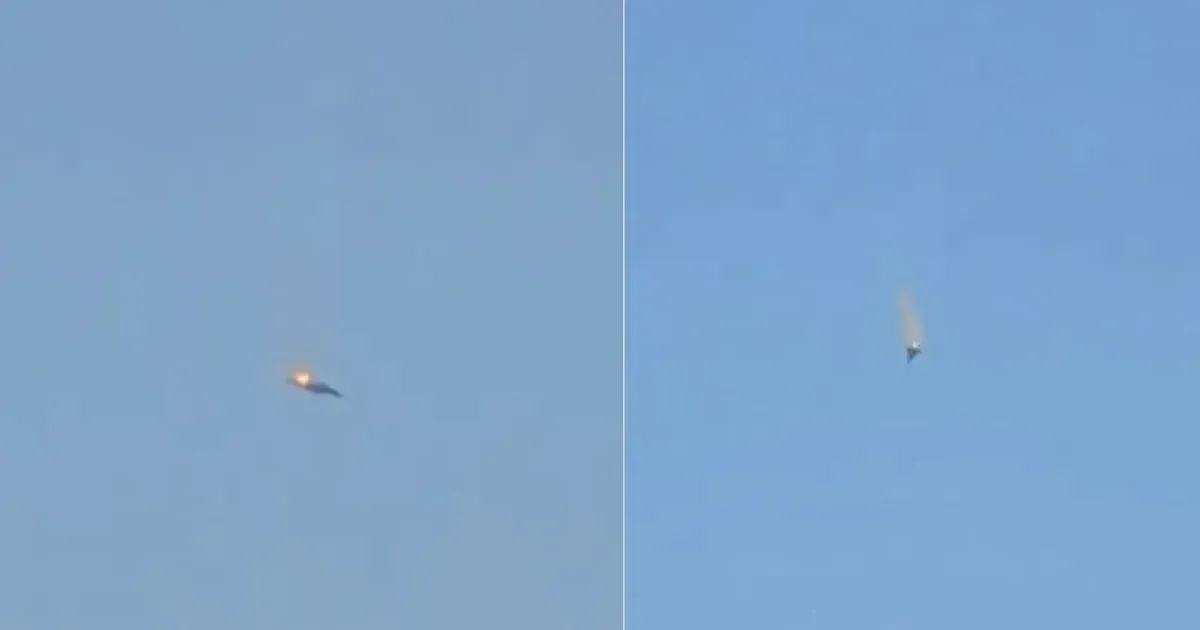
The quiet Monday morning skies over Kuwait were abruptly shattered by a dramatic and concerning incident, as a U.S. F-15E Strike Eagle fighter jet experienced a catastrophic failure and crashed. While the sight of a military aircraft in an uncontrolled descent sparked immediate alarm, the situation quickly shifted to one of relief: its pilot successfully ejected and was recovered without serious injury. This event, captured in widely circulated social media videos, has prompted an immediate investigation by U.S. and Kuwaiti authorities, raising questions about the cause and broader implications for regional security.
The incident occurred near the crucial Ali al-Salem Air Base, a significant operational hub for American forces in the Middle East. Initial reports and eyewitness accounts, corroborated by dramatic footage, depicted the dual-engine fighter descending rapidly before impacting the ground. Crucially, these same visuals showed a parachute deploying, confirming the pilot's successful escape just moments before the crash. The swift and safe ejection of the aviator stands as a testament to the advanced safety systems integrated into modern military aircraft and the rigorous training of their crews.
The Dramatic Descent and Swift Recovery
Onlookers in Kuwait were first alerted to the unfolding drama by the sight of the F-15E Strike Eagle, a cornerstone of U.S. air power, spiraling uncontrollably. Videos posted across various social media platforms quickly became primary sources of information, showing the aircraft in a fiery, uncontrolled spin before its final impact. Amidst the chaos, one detail offered immense relief: a tiny spec detaching from the plummeting jet, blossoming into a parachute.
The pilot's successful ejection was a critical turn of events. Reports indicate the aviator landed safely and was promptly located by local residents who, displaying commendable civic responsibility, assisted in getting the pilot to safety. This immediate local support played a vital role in ensuring the pilot's well-being following such a high-stress incident. Following recovery, the pilot was transported to a local medical facility for assessment and necessary care, confirmed to be in stable condition.
The crash site itself, reportedly within 10 kilometers (approximately 6.2 miles) of the Ali al-Salem Air Base, became a scene of intense rescue and recovery operations. Kuwaiti authorities, in direct coordination with their U.S. counterparts, swiftly secured the area to ensure safety and to begin the crucial process of investigating the wreckage.
Official Responses and Emerging Details
The Kuwaiti Ministry of Defense was quick to address the incident, confirming the crash of "several" American military aircraft and, most importantly, stating that "all crew members survived." Colonel Said Al-Atwan, a representative for the ministry, emphasized that search and rescue operations were initiated immediately. "Crews were evacuated from the crash sites and taken to the hospital for assessment and necessary medical attention," he stated, adding that their condition was "stable." This statement, initially suggesting multiple crashes, highlighted the fluidity of information in the immediate aftermath of such events. While the primary focus remained on the F-15E, the coordinated response underscored the strong military alliance between the U.S. and Kuwait.
The F-15E Strike Eagle involved in the incident is a highly capable, twin-engine, all-weather tactical fighter. It is renowned for its dual-role capabilities, excelling in both air-to-air combat and precision deep-strike missions against ground targets. Its deployment in Kuwait is strategic, supporting various U.S. operations in the region, including those aimed at countering regional threats and ensuring stability.
For more insights into the initial reports and the capabilities of the aircraft involved, you can refer to American F-15E Strike Eagle Crashes Near Kuwaiti Base: What We Know.
Unraveling the 'Why': Speculations and the Path to Discovery
As with any military aircraft crash, particularly one involving an advanced fighter jet in a strategically sensitive region, the immediate aftermath is often filled with speculation regarding the cause. The primary questions revolve around what led to the F-15E's uncontrolled descent. Several theories have emerged, ranging from mechanical failure to external factors:
- Mechanical or Technical Malfunction: This is a common initial hypothesis for aircraft incidents. Modern fighter jets are incredibly complex machines, and a malfunction in critical systems such as engines, flight controls, or avionics can lead to rapid loss of control.
- "Friendly Fire" Incidents: Some OSINT (Open-Source Intelligence) channels and initial reports hinted at the possibility of the aircraft being downed by "friendly fire," potentially from Kuwaiti air defense systems. This theory, though unconfirmed, highlights the inherent risks of military operations, especially when multiple forces operate in close proximity.
- External Attack Claims: Iranian sources, amidst ongoing tensions, reportedly claimed responsibility for downing a U.S. fighter. However, such claims are often made without verifiable evidence in the immediate wake of incidents and require rigorous scrutiny.
It is crucial to emphasize that at this stage, these remain speculations. Military accident investigations are exhaustive processes, often taking months, if not years, to conclude. Investigators will meticulously examine wreckage, flight recorder data, maintenance records, and witness testimonies to piece together the sequence of events. The aim is not only to determine the direct cause but also to identify any contributing factors and implement measures to prevent future occurrences.
Understanding the complexities surrounding potential "friendly fire" scenarios can be further explored in Multiple US Military Jets Crash in Kuwait: Friendly Fire Suspected?
Expert Insight: The geopolitical climate in the Middle East often means that any incident involving U.S. military assets is immediately viewed through a lens of regional conflict. However, experience shows that a significant percentage of military aviation accidents are due to mechanical issues or human factors, rather than hostile action. Patience for official investigative findings is paramount.
The Lifesaving Power of Ejection Systems and Rescue Protocols
The successful ejection and survival of the F-15E pilot underscores the critical importance of advanced safety systems in military aviation. Modern ejection seats are marvels of engineering, designed to safely propel pilots out of a rapidly failing aircraft at high speeds and altitudes, deploy a parachute, and provide survival equipment. The few seconds between a catastrophic failure and impact are all a pilot has, making these systems literally life-saving.
Beyond the technology, the coordinated response after an incident is equally vital:
- Immediate Notification: Air traffic controllers and other military units track aircraft and can quickly detect distress signals or deviations from flight plans.
- Search and Rescue (SAR): Dedicated SAR teams, equipped with specialized aircraft and personnel, are on standby to locate and recover downed aviators. In this case, local civilian assistance proved invaluable.
- Medical Assessment: Once recovered, pilots undergo thorough medical evaluations to address any injuries sustained during ejection or landing, and to assess for shock or other physiological impacts.
Practical Tip for Communities: If you ever witness an aircraft incident, immediately report it to emergency services. Do not approach the crash site unless specifically directed by authorities, as wreckage can be dangerous (unexploded ordnance, hazardous materials). However, if a pilot has ejected and is in visible distress, providing immediate, safe assistance, as the Kuwaiti locals did, can be life-saving.
Conclusion
The crash of a U.S. F-15E Strike Eagle in Kuwait, while a serious incident involving the loss of a valuable military asset, ultimately concluded with the best possible outcome: the safe recovery of its pilot. This event highlights the inherent risks associated with military aviation, even in routine operations, but also showcases the resilience of both advanced safety technology and the human element in crisis situations. As the joint U.S.-Kuwaiti investigation proceeds, a clearer picture of the incident's cause will undoubtedly emerge. For now, the focus remains on understanding the circumstances that led to the crash and reinforcing the safety protocols that ensure the well-being of military personnel operating in complex environments like the Middle East.